• Home
  • About Tomb Bug
  • Bookshelf
  • Cemetery Etiquette
  • Grave Hunting Primer
  • Gangsters In Granite

Tomb Bug

~ Where Death Meets History

Tomb Bug

Tag Archives: The Gravecast Blog

2013 L.A. Gravecation Day 5 & 6 – Death Hag Weekend Insanity

05 Sunday Jan 2014

Posted by Josh Perry in Gravecations - Stories From The Road

≈ Leave a comment

Tags

Angelus-Rosedale Cemetery, Biograph Company, Black Dahlia Murder, Death Hag, Eden Memorial Park, featured, Groucho Marx, Harvey Lembeck, John Gilmore, Jonathan Hale, Los Angeles, Mark Masek, Michael Gilden, Phil Foster, Scott Michaels, The Gravecast Blog, The Motion Picture Country Home, Tod Browning


On Saturday October 5th, I’d been in the Los Angeles area for five days. With the 2013 L.A. Gravecation approaching on the horizon of coming to an end. There was still much to see, and do. On this particular day I made plans to visit Angelus-Rosedale Cemetery, and attend the final night of the 2013 Dearly Departed Death Hag Weekend.
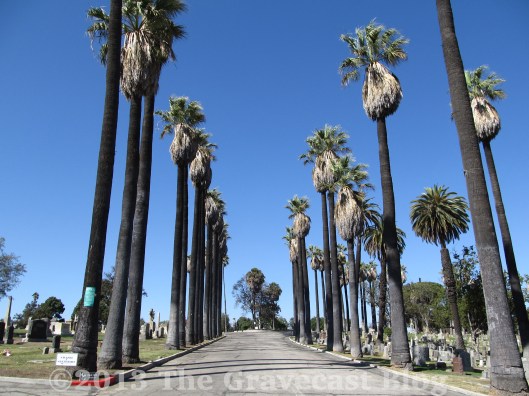
angelusrosedalerandom02

The History: Angelus-Rosedale Cemetery

Angelus-Rosedale Cemetery, nestled on 65-acres of historic cemetery real estate. It was founded in 1884. Originally christened Rosedale Cemetery. In 1993 the cemetery became known as Angelus-Rosedale when nearby funeral home Angelus Funeral Home, bought the cemetery from the previous owners.

Some of the more illustrious movers, shakers, & politicians in early Los Angeles history who are buried, or interred in Angelus-Rosedale include many former mayors of Los Angeles who call this cemetery their final home. Angelus-Rosedale is considered to be one of the first cemeteries west of the Rocky Mountains to incorporate the design features usually seen in garden cemeteries. This style of cemetery/memorial park is a popular landscaping feature in cemeteries/memorial parks around the country. Some of the key highlights of a garden cemetery include beautiful and decorative tree plantings, shrub varietals, flowers, natural scenery and works of monumental art. If you’re interested in learning more about the rural/garden cemetery movement, feel free to visit Wikipedia. Take it from me if you visit a garden cemetery in your region, be ready for an overabundance of photo opportunities. One of the things I find interesting about Angelus-Rosedale cemetery is that it was the first cemetery in Los Angeles to offer burial services to people from different ethnic backgrounds. Not only that, in 1887 the cemetery became the second in the United States (the first west of the Rocky Mountains) to perform on site cremations. If you’re interested in learning more about this small yet tranquil historic Los Angeles burial ground, you should definitely visit the Wikipedia or Find A Grave pages.

The Tour: Angelus-Rosedale Cemetery

Upon my arrival at Angelus-Rosedale, I had a game plan set in motion to whose graves I wanted to find at this historic cemetery. However, unbeknownst to me, as I’d quickly found out when I arrived at the cemetery, I discovered that the cemetery office was closed for the day. So with this in mind and knowing I wouldn’t be able to get a much needed cemetery map. As this was the first time I’d been to Angelus-Rosedale. I had to start thinking rather quickly on how I’d go about finding the three other graves I wanted to find, (aside from the one I found in the mausoleum) who were buried on the cemetery grounds.

Before the unsuccessful trek around the cemetery, I made my way towards the Angelus-Rosedale Mausoleum & Columbarium. Inside this very cool building, I felt an aura of a Gothic atmosphere, due to the dimmed lighting and overall decrepit nature of the building. I made a leisurely stroll inside while admiring the creepy ambiance of the mausoleum until I came upon the “Eternal Light” hallway. It was in here, where after strolling about for several minutes, that I came upon the cremains niche of prolific horror film director Tod Browning.

Tod Browning

(July 12, 1880 – October 6, 1962)

Located roughly halfway down the hallway on the right side of the corridor wall, in niche 20648 isprolific actor, director, & screenwriter Tod Browning. He was born in 1880, and spent his youth in Kentucky. He grew tired of home life in the Blue Grass State, and yearned for adventure. He became fascinated at a young age by the glitz and glamor of circus life and the sideshows that went along with the atmosphere. He eventually ran away from home at the age of 16 to follow his dreams of joining the circus.

After leaving the circus, Browning would work odd jobs eventually landing a job at a New York theater. While working at the theater. He had a chance encounter with prolific director D.W. Griffith. Griffith was impressed with his acting abilities, and offered him a job with the New York based Biograph Company. In 1913 Griffith severed his affiliation with The Biograph, and decided to head west. In his wake Browning followed Griffith to California, and continued to act in his films.

In 1917, Browning made his film début as director with the silent era film Jim Bludso (1917). After the positive response of this film, he hightailed it back to New York for a year to work on other motion pictures. In 1918, he beelined it back to California and produced a few films for Metro.

Out of the sixty-two motion picture director credits Browning has to his name, a couple of his more prolific films include Dracula (1931), which starred Bela Lugosi & Freaks (1932), which is a motion picture featuring grotesque sideshow freaks in various forms.

In October of 1962 while residing in Santa Monica at the home of some friends, Browning, who was a lifelong smoker succumbed to complications of cancer. At the time of his death, he was 82 years old. If you’re interested in learning more about his fascinating life feel free to cruise over to Wikipedia, or Find A Grave, also the book “Dark Carnival: The Secret World of Tod Browning Hollywood’s Master of The Macabre” by David Skal is probably a good choice to read if you’d like to get into the mindset of Tod Browning’s cinematic work. And finally if you’d like to see his full film credits listing, IMDb is the place to be.

After I was finished photographing the graveside niche of film director Tod Browning, I decided to make an attempt to find the graves of the three celebrities buried in the cemetery who I had locations for. There was just one miniscule problem. Besides not having a cemetery map due to the office being closed, pretty much all the markings where the section letter/number would be throughout the various sections on the curb were illegible. So it was hard to determine which section was which. Keep in mind I had the section and lot numbers for the three people I was looking for but gave up trying to find them.

The three people buried in the cemetery who I had no luck finding werelandowner and the namesake for Burbank, CA, David Burbank, Silent era actress Louise Glaum, and Marshall Neilan who was a silent era actor, director, screenwriter, and producer. After I was finished doing what I do best at Angelus-Rosedale Cemetery, It was time to cruise up to Altadena, California to Mountain View cemetery to partake in night two of The 2013 Dearly Departed Death Hag Weekend insanity.


Death Hag Weekend: Night Two – Mountain View Cemetery Dinner Party

Before I get started with this section. I want to take a moment to explain what a “Death Hag” is. Simply put a “Death Hag” is someone who’s fascinated by any and all accounts of death. In particular the deaths of famous, or notable people. The brainchild behind the “Death Hag” phenomenon is my friend Scott Michaels. Scott pretty much carved out his own sort of cult following as the owner of the Los Angeles based Dearly Departed Tours, which is a boutique sightseeing tour venue in Hollywood. Dearly Departed Tours showcases the locations where celebrities have met their untimely demise, or some tabloid worthy incident, or scandal took place. Scott also owns/maintains the highly informative website Find A Death, which chronicles the last moments of celebrities in biographical form. Hence the name “Dearly Departed Death Hag Weekend”. The weekend event is an annual gathering in Los Angeles, of like-minded people who share the same interest when it comes to celebrities or notable people dropping dead.

Despite the morbid nature of the annual weekend, the primary goal of the gathering which has now taken place for the past two years, is to raise money to mark the grave of an unmarked celebrity burial site, or cremain’s niche. It’s a way to honor the celebrity because even the most beloved or obscure celebrities who don’t have a grave marker for whatever reason, should be remembered. This year, the donations raised from the raffle giveaway, and other raised proceeds at The 2nd Annual Dearly Departed Death Hag Weekend went towards paying for the beautiful grave marker for beloved actor Jonathan Hale, who’s best remembered for acting in the “Blondie” movies, and several episodes of “Superman”. Hale committed suicide while living out the remainder of his days at The Motion Picture Country Home on February 28th 1966.

Some of the key highlights of the Saturday night gathering inside the Pasadena Mausoleum, on the grounds of Mountain View cemetery included a fascinating, and extremely well researched presentation by Mark Masek. The presentation related to the Lamb Funeral Home scandal which also involved Mountain View cemetery. If you’re interested there’s a true crime book which chronicles the scandal in detail. The book is titled “Chop Shop” and is written by Kathy Braidhill. From what I’m told by friends who’ve read the book is that it’s a page turning fascinating tome.

Another key highlight of the Saturday night revelry inside the Pasadena Mausoleum was the thought-provoking presentation given by noted actor, and author John Gilmore. Gilmore, along with his various acting roles, wrote a handful of books related to L.A. noir, true crime, and fiction. He presented some of his personal theories into the infamous Black Dahlia murder, and other crimes that took place in L.A. history. I found his theories to be really intriguing. After Gilmore was finished with his highly informative presentation. I mingled among the 100+ party goers before the night commencedand The 2nd Annual Dearly Departed Death Hag Weekend came to a close.


On Sunday October 6th, I realized I had two days left of cemetery grave hunting in Los Angeles before hopping on a plane at LAX, and heading home on Tuesday October 8th. In situations like this, it’s customary for me to kick things up a notch. So what did I do? I hightailed it to Eden Memorial Park.

The History: Eden Memorial Park

Situated at the northern edge of the bustling San Fernando Valley, 15 miles to the northwest of Hollywood. In an area surrounded by beautiful mountainous ranges, is where you will find Eden Memorial Park.

Opening in 1954. Eden Memorial Park by all means, isn’t one of Los Angeles oldest Jewish burial grounds. Nor is it one of the more well known memorial parks compared to the other three Jewish cemeteries used primarily for Los Angeles residents who happen to be Jewish. However due to the rather serene placidity, you will encounter strolling around this beautiful memorial park, with the steeply inclined hillside slopes. Make this cemetery a true hidden gem for seasoned grave hunters alike. 

As you make a leisurely stroll around Eden Memorial Park, take note of the key points of interest. One of the beautiful exhibits you definitely should checkout which is a key feature of Eden Memorial Park. Is the well-known mural titled “The Twelve Tribes of Israel” by Joseph Young. Completed in 1959, this large mosaic is depicted in the center of the cemetery, on the garden mausoleum wall. This particular painting is a masterful work of art that spans 18-feet above the ground. “The Twelve Tribes of Israel” mosaic is a breathtaking pre-cast Byzantine bas-relief.

Keep in mind if you plan to visit Eden, due to the cemetery is surrounded by tall shrub plantings, along the bordering streets. This factor alone was put in place to keep the cemetery hidden from the average person discovering the tranquil oasis from the road. With this in mind your going to need a GPS device to pinpoint the location of the cemetery.

The Tour:

Upon my arrival at Eden Memorial Park. I eased my vehicle to a stop inside the cemetery. So I could pinpoint my game plan. Being that I had no desire to get a cemetery map which usually does come in handy. I had a better tool at my disposal. In the form of two L.A. grave hunting books. Most notably “L.A.’s Graveside Companion Where The VIP’s RIP” by Steve Goldstein, & “Hollywood Remains To Be Seen: A Guide To The Movie Stars Final Homes” by Mark Masek. Both Mark, and Steve are personal friends of mine, who I’ve had the utmost honor tograve hunt the days away during past L.A. Gravecations.

Being that there aren’t an “insane” amount of celebrities who are buried, or interred in Eden Memorial Park. The cemetery does have a nice dose of well-known celebs buried/interred here. If your interested to checkout the who’s who list of celebrities, and other Hollywood personalities buried in Eden Memorial Park. Checkout Find A Grave, or Wikipedia. As you’ll see, during my visit to Eden Memorial Park, I only found a few celebrities. The first on the list was prolific comedic actor Harvey Lembeck.

Harvey Lembeck

April 15th 1923 – January 5th 1982

Located in the NE corner of Mount Jerusalem a few steps below the Court of David section is where you will find prolific actor Harvey Lembeck. Lembeck was born in April 1923, a Brooklynite since birth, Lembeck got his official start in showbiz after graduating from New York University in 1947. At the time he was one half of the dancing duo “The Dancing Carrolls”. As time went on Lembeck’s prominence and virtuoso abilities on New York’s Broadway stages, the silver screen, and lets not forget to grace the TV sets in the homes of families across America. When it comes to television Lembeck is mostly known for his character roles on The Phil Silvers Show (1955), Stalag 17 (1953) and Ensign O’Toole (1962). As for the silver screen Lembeck usually portrayed the tough guy biker bad ass, or greaser gang leader, in the beach party movies of the 1950s, and 60s.

Moving along as the 1980s were on the horizon. Lembeck’s acting career was very much in full swing. In 1982 while performing in an episode taping of the TV show “Mork & Mindy” Lembeck collapsed from a heart attack and died on the spot. If you’re interested in seeing a more detailed biographical overview of Harvey Lembeck’s life, and acting career. Feel free to visit Wikipedia, or IMDb. After photographing the graveside of Harvey Lembeck. I then made a leisurely stroll a few steps away to the graveside of another Brooklyn born actor/comedian & that being Phil Foster.

Phil Foster

March 29th 1913 – July 8th 1985

Located In Front Of The Mount Jerusalem Mausoleum in lot 318H and a few leisurely steps away from Harvey Lembeck is where you will find Phil Foster. Born on March 29th, 1913 in Brooklyn. Foster began his ascent into showbiz when he started singing and dancing in front of movie theaters. As time went on Foster would compete in talent competitions. As the Great Depression was rolling on, Foster started partaking in the dramatic form of acting. Due to the fact that theaters weren’t operating he began performing in halls, backrooms, and other venues. In the late 1930s while living in Chicago. Foster began performing  as a stand-up comedian. As time went on his popularity as a stand-up comedian grew. Nationally Foster was in constant demand to perform at top-notch comedy clubs.

During WWII, Foster enlisted in the United States Army. After serving the country during the war. He returned to New York. Due to the stories he’d elaborate on from his youth, Foster became a variety show regular. In the 1950s Foster appeared in the science fiction movie The Conquest of Space (1955). Other TV appearances included: Games People Play, The Ed Sullivan Show and Toast of the Town along with This Is Show Business, The Tonight Show Starring Johnny Carson, Love Boat, and The Patty Duke Show. Out of all the TV appearances Foster was involved with. He’s most fondly remembered as Frank DeFazio on Laverne & Shirley.

Foster was a highly versatile actor & comedian who recorded multiple stand-up comedy albums, on top of being a playwright, and finishing a few story outlines. In July 1985, at the age of 72, while living in Rancho Mirage, CA. Foster passed away from a heart attack. If you’re interested in checking out Foster’s film/tv credits feel free to cruise over to his IMDb page.

After photographing the graves of actors Harvey Lembeck, and Phil Foster. I casually drove around the cemetery planning my next move. I then cruised over to the Court of Abraham North section where actor and stuntman Michael Gilden rests alongside some family members.

Michael Gilden

September 22nd 1962 – December 5th 2006

Located in The Court of Abraham North section in lot 2133 is actor and stuntman Michael Gilden. Gilden who was a native of Los Angeles was one of many actors who were born with a form of dwarfism. Gilden did stunt work for several episodic TV series, and motion pictures. Some of the TV shows he performed in include: Charmed, CSI: Crime Scene Investigation, Family Law, Cybill, and NCIS. Moving along some of the motion pictures Gilden was involved with include: “Star Wars: Episode VI-Return Of the Jedi (1983), “Freaked” (1993), “Once Upon A Christmas” (2000), “Snow White” (2001), “Nudity Required” (2003), “Southland Tales” (2006), “Against Types” (2006). In 2006 while living in the Los Angeles area with his wife Meredith Eaton-Gilden another actor with dwarfism. Gilden took his own life.

One of the things I wanted to point out on Gilden’s untimely passing. Is that when I visited his graveside in Eden Memorial Park. His father who’s also buried a few steps away. Passed away a few days before Michael took his own life. So I came to the conclusion that perhaps he couldn’t deal with his father passing away. If you’d like to see Gilden’s full film/tv credits checkout his IMDb page.

Groucho Marx

October 2, 1890 – August 19, 1977

Rounding out the tour at Eden Memorial Park. No visit to the cemetery would be complete without visiting the cremains niche, and paying homage to Julius Henry Marx. Who’s fondly remembered as comedian Groucho Marx.

Groucho Marx cremains niche is in a small room located within the garden mausoleum in the center of the cemetery. This small room is located roughly 200ft from the western edge of the outdoor mausoleum. It’s kinda hidden so look for it. Once you find the hidden room, open the door (hopefully it’s not locked) and canvas the back facing wall of the room. Located roughly in the center of the wall and eye level is his cremains niche.

Known as the master of the quick wit, Groucho along with his brothers Chico, and Harpo was the  sibling trio of the Marx Brothers comedy troupe. Marx, along with his brothers grew up on Manhattan’s upper eastside. Getting their start in showbiz by doing acts on the vaudeville circuit. The family would eventually head west to Hollywood.

In all Groucho Marx made 26 movies, 13 of them were with his brothers Chico, and Harpo. Of the 13 films Marx made with his brothers The Cocoanuts, Animal Crackers, Monkey Business, Horse Feathers, Duck Soup, and A Night at the Opera were probably their more popular. In June 1977 Marx was hospitalized at Cedars Sinai Medical Center in Los Angeles from complications of pneumonia. Two months later on August 19th Marx succumbed to the disease. If your interested in reading a detailed online biography on Groucho Marx, feel free to visit Wikipedia, or IMDb for his film credits.


So that pretty much concludes the “2013 L.A. Gravecation Day 5 & 6” article. Stay tuned for the Day 7 finale where I trekked to Forest Lawn Memorial Park – Glendale. If your interested to see the photos from the Day 5 & 6 insanity. Feel free to check them out below.
This slideshow requires JavaScript.

Share this:

  • Share on Facebook (Opens in new window) Facebook
  • Share on X (Opens in new window) X
  • Email a link to a friend (Opens in new window) Email
  • Share on Reddit (Opens in new window) Reddit
  • Share on LinkedIn (Opens in new window) LinkedIn
  • Share on Tumblr (Opens in new window) Tumblr
  • Share on Pinterest (Opens in new window) Pinterest
  • Print (Opens in new window) Print
Like Loading...

The Gravecast Podcast Ep13: Interview With Hollywood Forever Tour Guide Karie Bible

05 Friday Jul 2013

Posted by Josh Perry in The Gravecast Podcast

≈ Leave a comment

Tags

Hollywood Forever Cemetery, Karie Bible, The Gravecast Blog, The Gravecast Podcast


In episode 13 of The Gravecast Podcast. Myself and co-host Steve Goldstein sat down with Hollywood Forever Cemetery tour guide Karie Bible. In this episode Karie discusses the tours she offers at Hollywood Forever Cemetery, in Los Angeles. We also have a lively discussion about general grave hunting topics. This was a highly informative, and fun interview which I’m sure you’re going to enjoy. I’d also like to mention my good friend, cigar buddy, and musician Stephen Gresso created the music intro for this episode. If you’re interested in listening to more of Stephen’s audio tracks I invite you to visit:  http://www.tunecore.com/music/christ_fallen

https://tombbug.net/wp-content/uploads/2013/07/gravecastep13.mp3

Share this:

  • Share on Facebook (Opens in new window) Facebook
  • Share on X (Opens in new window) X
  • Email a link to a friend (Opens in new window) Email
  • Share on Reddit (Opens in new window) Reddit
  • Share on LinkedIn (Opens in new window) LinkedIn
  • Share on Tumblr (Opens in new window) Tumblr
  • Share on Pinterest (Opens in new window) Pinterest
  • Print (Opens in new window) Print
Like Loading...

Gravecast Recap May 30th 2013 – Holy Sepulchre Cemetery and Clover Hill Park Cemetery

01 Saturday Jun 2013

Posted by Josh Perry in Gravecast Recaps

≈ 6 Comments

Tags

Clover Hill Park Cemetery Birmingham Michigan, Grave Hunting, Holy Sepulchre Cemetery Southfield MI, The Gravecast Blog


So on Thursday, being that it was in the 80s temperature wise. I decided to take advantage of the beautiful weather, and checkout some cemeteries. Over the winter, and the past few years, I’ve been keeping an eye on local Detroit “celebrities” who’ve passed away. One of which was “Dr. Death” Jack Kevorkian, who passed away in 2011, and is buried in White Chapel Cemetery, in Troy, a Detroit suburb.

Dr. Kevorkian was my original goal for Thursday. However the plan soon changed, when upon further review on the website Find A Grave. When I checked out the bookmark I had saved for the memorial honoring highly acclaimed American journalist, columnist, author, and co-author, Jeffrey Zaslow. I noticed that Zaslow, who’s buried in Clover Hill Park Cemetery, in Birmingham, another Detroit suburb, had a marker at his graveside. Zaslow passed away in 2012 due to complications from an automobile accident he was involved in on a snowy northern Michigan road.  Another grave I planned to look into was the grave of Charles Leiter who’s rumored to also be buried at Clover Hill Park Cemetery. Leiter was an early mentor of the 1920s era Purple Gang who operated in the Detroit, and south-east, Michigan region. Another cemetery I planned to visit along with Clover Hill. Was Holy Sepulchre Cemetery, in Southfield, Michigan.

Upon my arrival at Clover Hill Park Cemetery. I cruised over to section 10B, which is where author, and columnist Jeffery Zaslow, rests. I was unable to find his gravesite, so I then cruised over to section 7, where Charles Leiter is rumored to be buried. After searching section: 7, for about twenty or so minutes, I came up empty-handed trying to find his grave. I then hopped back into my car, and cruised over to Holy Sepulchre Cemetery in Southfield.

Upon my arrival at Holy Sepulchre, I strolled into the office to inquire about three particular names of whose graves I was looking for. After obtaining the precise locations of “reputed” Detroit organized crime figures: Pietro “Peter” Corrado who died in January 1957, his son Dominic Peter “Fats” Corrado who died on June 26th 1985, & Michael Santo Polizzi who died on December 6th 1997. I then cruised over to the majestic mausoleum where these three hoodlums were at eternal rest. After photographing the graves (which you can see below) of the three Detroit mafioso’s. I then made my departure for home.

This slideshow requires JavaScript.

Share this:

  • Share on Facebook (Opens in new window) Facebook
  • Share on X (Opens in new window) X
  • Email a link to a friend (Opens in new window) Email
  • Share on Reddit (Opens in new window) Reddit
  • Share on LinkedIn (Opens in new window) LinkedIn
  • Share on Tumblr (Opens in new window) Tumblr
  • Share on Pinterest (Opens in new window) Pinterest
  • Print (Opens in new window) Print
Like Loading...

Five Gangland Graves in Mount Carmel Cemetery

16 Saturday Feb 2013

Posted by Josh Perry in General Articles

≈ 3 Comments

Tags

5 Gangland Graves in Mt. Carmel Cemetery, Al Capone, Dean O'Banion, Gangster Graves Mount Carmel Cemetery, Gangster Gravesites, Joseph Giunta, Mt. Carmel Cemetery Chicago, Sam Giancana, The Genna Brothers Chicago, The Gravecast Blog


Keeping with the tradition of this blog, and my self-respect as a taphophile. The abundance of “reputed” mobsters who’ve been laid to rest in many Chicagoland cemeteries, is for the most part on par with the cemeteries in and around New York City, and its five boroughs. With that being said, I’d like to present the readers of The Gravecast Blog, my own personal spin on “Five Gangland Graves in Mt. Carmel Cemetery.”

If you’ve never been to Chicago, or even if you have, and you enjoy the peaceful tranquility which cemeteries tend to offer. You might be interested in visiting Mt. Carmel Cemetery sometime in the near future. With The Windy City, being a notorious Midwestern hotbed for organized crime activity. The crime activity in the region, erupted into an all-out gang war, as the 1920s Prohibition era, was on the horizon, and then catapulted into more recent years. As it stands if you ever have the chance to visit Mt. Carmel Cemetery, in Hillside, Illinois a Chicago suburb. Please take the opportunity and visit the calming serenity of this beautiful suburban Chicago burial ground.

If you’re a bookworm like me, you might be delighted to find out that Arcadia Publishing. Published a book on Mt. Carmel, & Queen of Heaven in 2006. The book I’m talking about is Mount Carmel and Queen of Heaven Cemeteries, by Jenny Floro-Khalaf and Cynthia Savaglio. Another book that is definitely worth adding to your grave hunting/cemetery/taphophile library is Graveyards of Chicago: The People, History, Art, and Lore of Cook County Cemeteries by Matt Hucke and Ursula Bielski. Both of these books which I’ve included links to can be found on the “official” Gravecast Blog Amazon Storefront.

Before we get started, & to keep things simple, (for newbies and seasoned taphophiles alike). I’m only going to chronicle five out of the dozens of gangland gravesites you will be able to find in Mt. Carmel Cemetery. The criteria I came up with for people to use this method of grave hunting. Include five of the easiest graves to find throughout the cemetery. One of the things I felt was integral to include in the criteria is the fact that you won’t have to do a large amount of walking, or having to dig the headstones out of the ground which are buried under an inch or more of grass. The concise list I’ve come up with, based on my own meticulous research, and countless hours over the years strolling around the sprawling sections in Mt. Carmel. Doesn’t include the “reputed” mobsters buried/interred across the street at Queen of Heaven. In the future I’ll include a blog article, chronicling the “reputed” mobsters who rest in Queen of Heaven.

Lastly, compared to the article I published on January 28th 2013 titled “10 Cemeteries You Must See Before You Drop Dead” the graves chronicled in this article are listed in no particular order of importance. Also aside from what I mention in concise form. I’ll provide links if you wish to do further research on the personalities mentioned in this list. So without further jibber jabber, let’s get started.

1. Alphonse Capone

A visit to Mt. Carmel Cemetery would NOT be complete without visiting the graveside of one of the nations most notorious, yet seemingly popular mafia figures of ALL time. The fella, I’m talking about is none other than Alphonse Capone. Born on January 17, 1899, and passing away at the age of 48, on January 25, 1947 from cardiopulmonary arrest which was caused from years of suffering from the STD Neurosyphilis,.

Capone’s ascent to power began while growing up in the New York City borough Brooklyn. After dropping out of school in his adolescent years. He joined a small ragtag youth gang known as The South Brooklyn Rippers. Due to his astute skills with his fists, he’d eventually align himself with The Forty Thieves Juniors. The Forty Thieves Juniors were an adolescent branch of the infamous New York based Five Points Gang.

As Capone was growing older. He’d soon be summoned to Chicago, on behalf of Johnny “The Fox” Torrio. With Torrio’s keen, and calming tutorage. Capone would grow to become one of the most infamous crime lords America has ever seen. To make a long story short Capone’s downfall came about in the form of being tried, and convicted of Income Tax Evasion in 1931. After his conviction he was sent to the United States Penitentiary, in Atlanta. After a brief stay in Atlanta, he was transferred to the island mega fortress in the San Francisco Bay, Alcatraz in 1934.

As the Neurosyphilis which he contracted from years of a hard lifestyle, ravaged his health. His physical and mental stability for the most part deteriorated to the point that Capone’s private physician and a Baltimore psychiatrist performed examinations and concluded that Capone had the mental ability of an adolescent child. After this was noted, and Capone proved to not be a viable threat to anyone. He was released from Alcatraz, and lived out the remainder of his years at his Palm Island, Florida estate, under the care of his physician’s and family. During this time his heath and mental state continued to plunge. And as noted above he succumbed to cardiopulmonary arrest, which was brought on from years of suffering from Neurosyphilis.

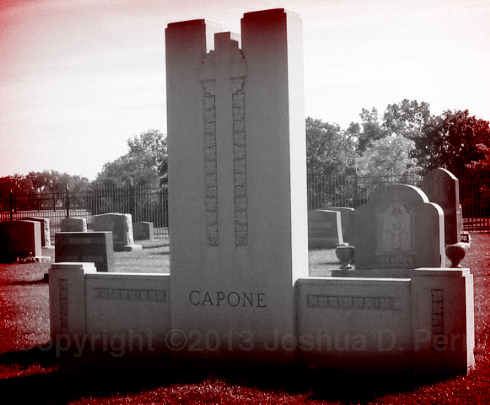
The interesting thing about Al Capone’s, final resting place. Is that he was originally buried in Chicago’s Mt. Olivet Cemetery on the southside of the city. The Capone family would eventually move Al, several siblings, and his father to Mt. Carmel Cemetery in suburban, Hillside. Another thing I’d like to point out about the gravesite in Mt. Carmel (which is relatively easy to find BTW) is that for years the Capone name on this beautiful granite monument was obstructed by the planting of a large shrub varietal. The past few times I’ve visited the monument over the last several years, in Mt. Carmel. The planting of shrubs was no longer there. And as you will see below it looks like this today. If you’re interested in learning more about Al Capone’s life and times. Feel free to visit his Wikipedia biography, or the highly informative website owned/maintained by my friend and self-proclaimed Al Capone aficionado Mario Gomes. You can find Mario’s website by cruising over to My Al Capone Museum.

capone3

Lastly a few books that are definitely worth reading on Capone’s life are: Capone: The Life and World of Al Capone by John Kobler, and Mr. Capone: The Real – and Complete – Story of Al Capone by Robert J. Schoenberg. The last book to read on Capone’s life is Uncle Al Capone – The Untold Story from Inside His Family by Deirdre Marie Capone. The last book I have not read. But being that its written by a family member, I’m sure it provides some good insight on Capone’s life from his families perspective. The reason I’ve included it on this list is because it seemed to get good reviews on Amazon.

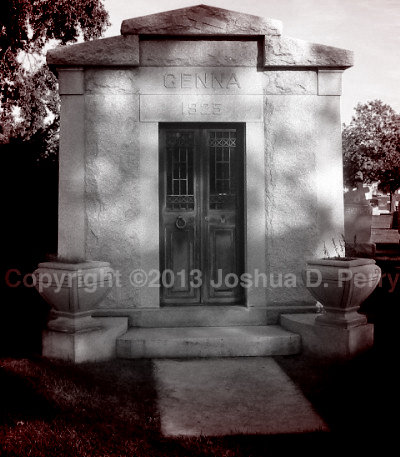
2. The Genna Brothers

Continuing on with The Gravecast Blog, Mt. Carmel Cemetery tour. Another point of interest for taphophiles to check out is The Genna Bros mausoleum. Chicago newspapers of the era dubbed The Genna Bros “The Terrible Genna’s.” The Genna’s consisted of seven brothers most notably  “Bloody” Angelo, Antonio “The Gentleman”, Mike “The Devil”, Peter, Sam, Vincenzo aka “Jim.” and finally the last brother Nicola, who stayed back in Sicily.

The Genna’s operated in the Taylor Street district of The Windy City, otherwise known as Chicago’s Little Sicily. They pretty much had an iron grip on the manufacture and distribution of corn sugar alcohol. The brothers made their illegal fortunes by hiring newly arrived Sicilian immigrants, to produce the rotgut product in their tenement homes. Sometimes the alcohol stills would explode leading to the deaths of the poor immigrants operating them. With the risk of death involved because of the stills exploding. The Genna’s would pay operators the large sum of $15 dollars a day to run, & maintain the stills. While other operators were forced into the alky-cooking business to pay off loans owed to the brothers.

To make a long story short. After the murder of Northside Chicago gang leader Dean O’Banion. The city would erupt into an all-out bloodbath ie gang war. With hoodlums from all sides dropping dead at the hands of an assassin’s bullet. The first of The Genna’s to be murdered was Angelo Genna. On May 27, 1925, Angelo who was being tailed by a car driven by The Northsiders, noticed what was about to go down, and hit things into high-gear. A high-speed car chase ensued through the streets of Chicago. As shots were fired during the car chase, Angelo crashed into a nearby light pole. Disoriented from smashing into the light pole. Angelo had no time to regroup, and defend himself for what was about to happen. George “Bugs” Moran of The Northside gang, exited the car pursuing Angelo and proceeded to execute Angelo as he lay injured on the ground from the car wreck.

Not even a month later on June 13, 1925, Mike “The Devil” Genna, lost his life in a shootout with Chicago police. This murder took place after a brief gunfight with The Northsiders. The last brother to be deposed of was Antonio “Tony The Gentleman” Genna. On July 8, 1925, Antonio had a meeting, with a top Genna lieutenant Giuseppe Nerone (“The Cavalier”). As Antonio and “The Cavalier” shook hands, an unidentified gentleman emerged from the shadows and proceeded to shoot Tony five times in the back. Tony died several hours later at the hospital. Keeping with the code of omerta he never identified his assassin.

gennafamily001

After the murders of Angelo, Mike, and Antonio. The remaining three brothers Jim, Sam, and Pete fled Chicago and returned to Sicily. They would eventually reappear in Chicago years later and live relatively quiet lives. While having little to no involvement in Chicago organized crime activity. The three remaining Genna Bros would pass away peacefully in obscurity. The six brothers are interred together in The Genna Family mausoleum, in Sec: 17 of Mt. Carmel Cemetery. If you’re interested in reading more about The Genna Brothers. Feel free to cruise over to my friend Mario Gomes website.

3. Dean O’Banion

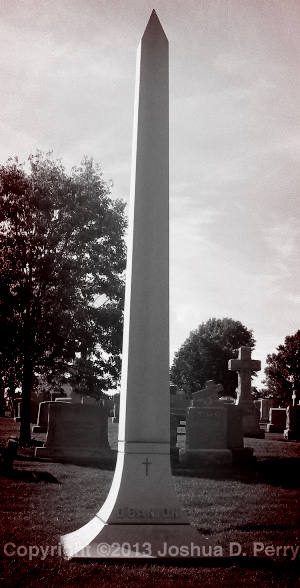
When I started grave hunting seventeen years ago. One of the very first mafia graves I discovered while visiting Mt. Carmel Cemetery. Was the graveside, and tall obelisk monument memorializing Chicago hoodlum Dean O’Banion. Around that time I was a fresh grave hunter, and very inexperienced in the hobby, I’ve come to love, and respect. I didn’t know what the hell I was doing. I didn’t know the proper way to search for the graves of famous or otherwise notable people. As time went on I’d soon discover that this suburban Chicago cemetery, (Mt. Carmel) held the remains of a multitude of Chicago hoodlums, who at one time or another were enemies, or allied to the end. So that’s why Dean O’Banion is included on this list. Because he was one of the very first mafia graves I discovered. That discovery would lead me into the hobby, I’ve come to love and respect, not only that the people I’ve become lifelong friends with along the way.

Dean O’Banion, who was born on July 8, 1892, spent his adolescent years in the small central Illinois town of Maroa. After the death of his mother. O’Banion’s father, relocated with his motherless children to the Northside Chicago, section known as Kilgubbin. This area which was known to locals then, as “Little Hell” was a notorious section of the city, known for its crime, and other unlawful acts. Raised a Catholic from birth, O’Banion, would serve as a choir boy, at Chicago’s renown Holy Name Cathedral. As time went on O’Banion would lose interest in serving the Catholic Church. The street life in the Kilgubbin, section of Chicago, was a more appealing facet to his budding career.

An early nickname that was bestowed upon O’Banion was the name “Gimpy.” This nickname derived from the fact that his left leg was a few inches shorter than his right leg. The shortness of his left leg, compared to the right, was rumored to be due in part to a streetcar accident young O’Banion was involved in, as an adolescent.

deanobanion001As O’Banion grew older he joined other budding hoodlums in The Market Street Gang. This particular gang specialized in various forms of theft, and robbery. The members of the Market Street Gang, would eventually graduate to more explicit acts of thuggery. Most notably as “sluggers” for the newspaper circulation wars of the era. The Market Street Gang, aligned themselves originally with The Chicago Tribune, and then later switched alliances and went to work for The Chicago Examiner. The switching of sides so to speak was likely due in part because of a better offering to the gang at the hands of newspaper publisher Moses Annenberg. Through Annenberg, the gang became acquainted with safecracker Charles “The Ox” Reiser. With Reiser’s guidance, the gang soon expanded to safecracking as a means of making money.

In 1920 as the dawn of Prohibition (which outlawed the manufacture, and consumption of alcoholic beverages) was on the horizon. O’Banion and his motley group of hoodlum buddies decided to try their hand at bootlegging. To get things started O’Banion made connections with Canadian beer, and liquor suppliers to ship various intoxicating beverages via different predetermined routes to Chicago.

As the roaring 20s were rolling on, and the money was no doubt rolling in. It’s alleged that O’Banion was raking in $1 million dollars a year on booze alone. Along with money and power comes loyal followers. Some of O’Banion’s most devout followers included: Samuel “Nails” Morton, Louis “Two Gun” Alterie, Vincent “The Schemer” Drucci, George “Bugs” Moran, Pete & Frank Gusenberg, & Earl “Hymie” Weiss.

In 1920, a meeting was held with all the prominent Chicago gangs in attendance. The topic of discussion was the slicing of the pie so to speak. What I mean by this, each of the gangs in attendance at the meeting carved out a specific territory for themselves in Chicago. It’s believed that there was enough money to be made in bootlegging, for all the gangs to get an equal piece of the pie. O’Banion agreed to this ruling on the condition that he was able to keep the northside rackets, and the highly lucrative Gold Coast region of the northside.

Everything was calm for about three years. Until some of the gangs on the southside decided to move into the Chicago suburb of Cicero. Needless to say, O’Banion wanted a piece of the action. Southside crime lord, Johnny Torrio granted O’Banion some of the beer rights and a 25% interest in a gambling establishment known as “The Ship.” The adventurous O’Banion then convinced several speakeasy owners in other territories to move their operations to his part of Cicero. This plan would have possible volatile ramifications. Torrio thus tried in vain to convince O’Banion to vacate his plans. In return, Torrio offered O’Banion a percentage of southside brothel earnings. O’Banion would have none of it. Being a devout Catholic he loathed prostitution.

In 1921 after marrying Viola Kaniff, O’Banion bought an interest in the northside flower shop owned by friend William Schofield. The flower shop was located directly across the street from Holy Name Cathedral, where O’Banion, and Weiss attended mass. The upper level of the shop would act as O’Banion’s headquarters for his growing criminal endeavors. The main level would serve as O’Banion’s legitimate business venture. O’Banion was quite fond of flowers, he also had a keen sense of style when it came to floral arrangements.

Meanwhile, to further ignite to the already burning fire. The Genna’s (discussed above) began pushing their rotgut whiskey on the northside of the city. This territory encroachment infuriated O’Banion to the point that he complained about what the Genna’s were doing to Torrio. Torrio meanwhile didn’t do a damn thing about the O’Banion-Genna territory dispute. So what did O’Banion do? He decided to hijack liquor shipments owned by the Genna’s. As a retaliatory move, the Genna’s decided to eliminate the Irish thorn in their side once and for all. But there was one minuscule problem.

Michele Merlo the Chicago Chapter President of the Unione Siciliana who was dying of cancer, was still alive. With Merlo hanging on for dear life. He was the sole reason O’Banion was still walking the streets of the northside, without the fear of being assassinated. The thing is Merlo disapproved the use of violence to settle gang disputes, in Chicago and as such he wholeheartedly disapproved the murder of O’Banion while he was still alive. On November 8, 1924, Merlo passed away peacefully from Cancer. Two days later on November 10th 1924 O’Banion would meet his fate.

On November 10th, O’Banion was hard at work, in the back room of the flower shop preparing floral arrangements. When in strolled reputed New York mobster Frank Yale, and the Genna murder twins John Scalise & Albert Anselmi. Yale was in town for Merlo’s funeral, Yale also served a dual purpose of offering O’Banion the coup d’état handshake that would cost him his life. As O’Banion came out of the backroom to greet his gangland visitors, he put out his hand to shake Frankie Yale’s hand. Yale put out his hand, as he was shaking O’Banion’s hand Yale put it into an ironclad grip. As this was happening Scalise, and Anselmi proceeded to pump two bullets into O’Banion’s chest, and two in his throat. The final coup d’état ended with a bullet to the back of O’Banion’s head. Promptly ending his young life. If you’re interested in visiting Dean O’Banion’s final resting place. You can pay your utmost respects to him in section: L of the cemetery. He’s very easy to find as his obelisk monument is one of the tallest in the cemetery, and the plot is along the road in the cemetery.

The interesting thing about the final resting place of Dean O’Banion. Is that he’s buried a mere several dozen yards from the private mausoleum of Michele Merlo, the man who kept him alive until his unfortunate death from cancer. Also buried nearby are Earl “Hymie” Weiss and Vincent Drucci. Despite being denied a Catholic burial due to his status as a gang leader. O’Banion has a tall obelisk monument and a stunning view of the Bishop’s Mausoleum. This particular mausoleum is the centerpiece of Mt. Carmel Cemetery. Many of The Windy City’s most beloved Catholic bishops and cardinals rest inside this majestic mausoleum. If you’re interested in learning more about O’Banions life. A few websites that are definitely worth a visit include the Dean O’Banion page on the My Al Capone Museum website and Dean O’Banion Online. If you’re into reading true crime Mafia books I highly recommend  Guns and Roses: The Untold Story of Dean O’Banion, Chicago’s Big Shot before Al Capone by Rose Keefe. I read this book a few years ago. The book brings to light many factual tidbits about O’Banion’s childhood in Maroa, Illinois and his ascent to Northside Chicago crime lord. Highly informative and interesting.

4. Sam “Momo” Giancana

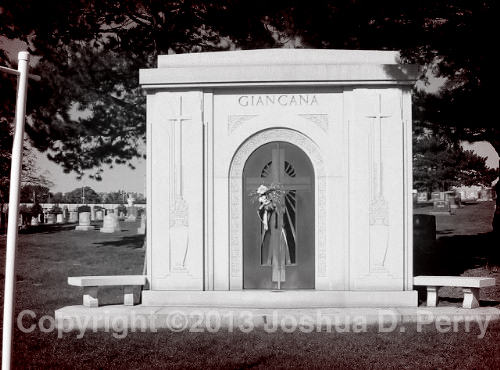
If you take the opportunity to visit Mt. Carmel Cemetery. Another point of interest in Chicago gangland graves to check out. Is the private mausoleum of Sam “Momo” Giancana. Growing up in Chicago’s “Little Italy,” Giancana got his start in Chicago gangland circles as a member of the juvenile Forty-Two Gang. The Forty-Two Gang was the starting point for a multitude of budding Chicago hoodlums. The gang was the brainchild of Chicago politician and reputed mafioso Joseph Esposito.

Growing up Giancana would fine-tune three key features that would lead him to stand out from other budding hoodlums. The first being in a time of dire need he was skilled at driving second, he was an exceptionally good earner, and third a ferocious killer. The mixture of these three things was a recipe for success for the budding young turk. After the murder of Esposito, The Forty-Two Gang was morphed as the de facto extension of The Chicago Outfit. Due to Giancana’s leadership abilities, coupled with his aptitude for making large sums of money. These factors alone would eventually draw the attention of Outfit elders. Taking into consideration all these factors Giancana would be “made” into The Chicago Outfit in the 1930s.

Giancana’s ascent through the ranks of The Outfit began in 1945. After serving time at the Federal Correctional Facility, in Terre Haute, Indiana. Giancana convinced prominent Outfit godfather, Anthony Accardo, to stage a large-scale take-over of the African-American dominated policy rackets in Chicago. After the brutal murders, and close call assassination attempts of a few southside policy kings, at the hands of Giancana’s crew. The takeover was complete. The money Giancana brought in due to this takeover brought him further recognition to Outfit leaders. The policy rackets takeover is also believed to be a contributing factor in Giancana being “anointed” as the Outfit’s new boss when Accardo went into semi-retirement in 1957. As the 1960s were underway, Giancana along with several other nationally known Mafiosi would be linked to a plot orchestrated by the CIA to assassinate Cuban President Fidel Castro. I’d go into detail on this little tidbit but my time is precious and I think you should read the summary on Wikipedia, because I feel despite the source it gives a general overview of the Castro debacle.

With every ascent to power usually comes an abrupt downfall. Giancana’s abrupt plunge in popularity came in the form of drawing too much attention due to his high-profile personality from various ventures he had going. Not only that the rubbing elbows with noted celebrities who also moonlighted as friends of politicians (JFK), didn’t really help his cause either. Another case in point Giancana refused to give his cohorts in the Outfit a piece of the action on several off-shore casinos he was a silent partner in. As a result, Giancana was deposed in the mid-1960s by Ricca and Accardo as the day-to-day boss and replaced by Joseph “Joey Doves” Aiuppa. After the demotion, Giancana hightailed it for Cuernavaca, Mexico and lived life lavishly while residing in a Spanish style villa. That is until Mexican authorities arrested and then deported him back to the states.

Upon touching down on American soil. Giancana promptly joined the FBI as a witness against Chicago’s organized crime faction. This would pretty much make Giancana a marked man. The FBI requested that Oak Park, police guard his palatial home in the event that the Outfit would make good on their promise to eliminate their former leader. As luck would play in the Outfits corner. On the night of June 19, 1975, for some odd reason the police detail assigned to guard Giancana’s home was dismissed from their post. This was the chance the Outfit was waiting for. As Giancana was frying sausages, and peppers. The lone gunman came up from behind him and shot him once in the head. As the former Chicago crime boss lay mortally wounded on the ground the assassin then turned his bloody cadaver over and proceeded to pump six more bullets into his face and neck.

samgiancana0001

One of the things I’d like to point out is the fact that Giancana was murdered shortly before he was scheduled to appear before a  U. S. Senate committee investigating the supposed CIA and organized crime conspiracy in the alleged plots to assassinate President John F. Kennedy. So the question remains? Who murdered Giancana? Was it former mafia cohorts itching for revenge, for Giancana becoming a government witness? Or was it the government? This high-profile gangland murder remains unsolved to this day. If you’re interested in paying your respects to Giancana, you can find his private family mausoleum in section 38 of Mount Carmel Cemetery.

5. Joseph Giunta

The final gravesite you should make a point to visit is that of noted Chicago gangster Joseph Giunta. Not much is known about Giunta’s early life. What is known is that he was the lead conspirator in an attempt to overthrow Al Capone’s criminal empire. The plan went down like this. Giunta recruited the help of Albert Anselmi and John Scalise, to overthrow Capone’s empire. Giunta promised the murderous assassins high-ranking positions, and prestige in his organization, if they succeeded in overthrowing Capone.

To make a long story short the trio failed miserably. Al Capone sensed what was about to unfold and invited the trio to a soiree at a Chicago banquet hall. As the party was underway, guests were indulging in vast amounts of booze, and feasting on the never-ending supply of delectable Italian cuisine. The festive gathering was full of laughter, partying and too much drinking. The event suddenly turned into a more serious occasion when after the honored guests were praised they were confronted about the allegations regarding the overthrow. After pleading for their lives the beating would begin. Beaten to the point of being unrecognizable at the hands of Al Capone, and his henchmen. The coup d’état of the evening was highlighted when a handgun was brought out and the lives of the treasonous trio was ended.

joegiunta0003

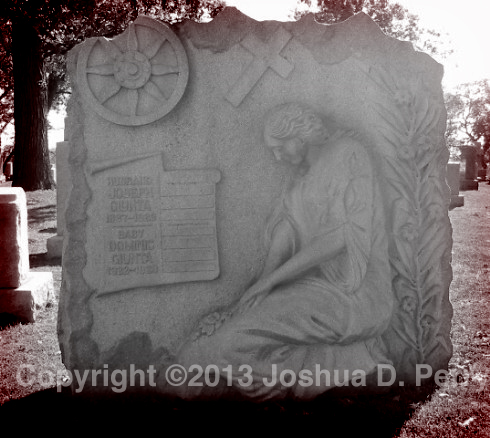
After their brutal murders, the bodies of Anselmi, and Scalise were shipped back to Sicily for burial. While Giunta was laid to rest in a ten thousand dollar bronze casket with a glass top cover for viewing. Giunta’s burial outfit included attire that would impress even the most discerning dandy of the era. Adorning the suit was an assortment of diamonds and other jewels. Giunta was laid to rest peacefully in section 26 of Mount Carmel Cemetery. He’s roughly in the middle of the section facing north. The burial location is marked by a large obtrusive granite monument that is extremely hard to miss if you know what you’re looking for (see photo below).

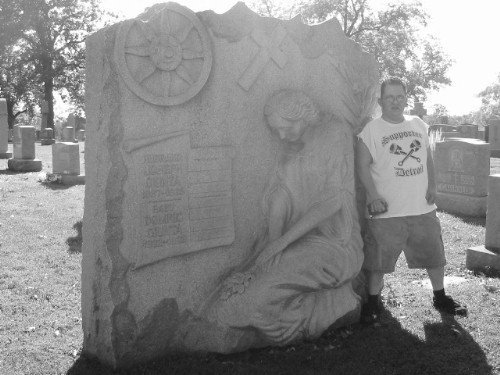
The interesting thing about the burial site of Joseph Giunta is that until I tracked it down the last time I was in Chicago a few years ago. The monument was an extremely elusive one for me to find. Take a look at the photo below of me leaning next to the monument. You’ll see exactly what I’m talking about. This monument is just one big chunk of granite. Which I’d imagine cost a small fortune to produce.

Photo of me at the graveside of Chicago mobster Joseph Giunta.

Photo of me at the graveside of Chicago mobster Joseph Giunta.

If you have any questions or comments about the five hoodlums featured above, or any other “reputed” mobster buried in Mount Carmel Cemetery, feel free to leave your questions and comments below.

Share this:

  • Share on Facebook (Opens in new window) Facebook
  • Share on X (Opens in new window) X
  • Email a link to a friend (Opens in new window) Email
  • Share on Reddit (Opens in new window) Reddit
  • Share on LinkedIn (Opens in new window) LinkedIn
  • Share on Tumblr (Opens in new window) Tumblr
  • Share on Pinterest (Opens in new window) Pinterest
  • Print (Opens in new window) Print
Like Loading...

2012 L.A. Gravecation Day 1-2 And So The Saga Continues

08 Monday Oct 2012

Posted by Josh Perry in Gravecations - Stories From The Road

≈ Leave a comment

Tags

1933 Worlds Fair, 20th Century Fox, 20th Century Fox Studios, A Lion is in the Streets (1953), A Night At The Movies (1937), Academy Awards, Albert Austin, Albert Clark, Alexander's Ragtime Band (1938), Alice in Wonderland (1933), All The Kings Men (1949), and All About Eve (1950), and Cal State Fullerton, and finally The Cape Town Affair (1967), and In Cold Blood (1967), and Untamed (1955), Ann Rule, April in Portugal, Arsenic and Old Lace (1944), Barbara McLean-Webb, Barbara Webb, Batman, Ben Casey (1961), Beneath The 12-Mile Reed (1953), Bill Medley, Billy Wilder, Bobby Hatfield, Brown University, Bumble Boogie, Burt Lahr's Burlesque, Cal State Long Beach, Cannes Film Festival Award, Captain From Castille (1947), Chico Marx, Common Sense (1920), Corona del Mar, Cowboy (1958) Pepe (1960), Crime Doesn't Pay, Darryl Zanuck, David Brown, David Stuart Freeman, Directors Guild of America Award, Dr. Ralph Smedley, E. Niles Welsh, Ebb Tide (1965), Edison the Man (1940), Frank Capra, Freddy "Mr. Silverstone" Martin, Freddy Martin, George Olsen, Guys and Dolls (1955), Harold Minjir, Harry F. Perry, Helen Grace, Helen Grace Chocolates, I Love Lucy, I've Got a Lovely Bunch of Cocoanuts, In Old Chicago (1937), Jack London (1943), James Cagney, Jeanne Carmen, John Beaury Gallaudet, John C. Fulton, Just Once in My Life (1965), Kalamazoo, Kiss Tomorrow Goodbye (1950), Les Miserables (1935), Linda Marie Brown, Lloyd's of London (1936), Lois Steele, Man of a Thousand Faces (1957), Manhattan Shakedown (1937), Mary D. Marx, Mary of Scotland (1936), Meet Me in Las Vegas (1956), Michigan, Miss George Washington (1916), Mitchell Halpern, Mr. Smith Goes to Washington (1939), Niagara (1953), Nobel Peace Prize, Orange County, Pacific View Memorial Park, Patti Baily, Paul Mantz, Paul Whitman Orchestras, Perry Mason, Pete Smith Specialties, Phil Spector, Porgy and Bess (1959), Professor Loh Sen Tsai, Ringling Bros Circus, Ripley's Believe It or Not, Robert Benchley's: How To, Robert Webb, Robert. L. Hatfield, Rock n' Roll Hall of Fame, Roy Rowland, Ruben Salazar, Silver Dollar Bar, Son of Frankenstein (1939), The Agony and The Ecstasy (1965), The Awful Truth (1937), The Babe Ruth Story (1948), The Beverly Hillbillies, The Creature From The Black Lagoon (1954), The Gay Divorcee (1934), The Ghost Goes Wild (1947), The Gravecast Blog, The Invincible Man (1933), The Mason-Dixon, The Monster of Playa Blancas (1959), The Outriders, The Paramours, The Queen of the B-Movies, The Rain Cain (1939), The Righteous Brothers, The Secret of Storm Country (1917), The Seven Cities of Gold (1955), The Snow's of Kilmanjaro (1952), The Song of Bernadette (1943), The Story of Louis Pasteur (1935), The Strange Case of Doctor RX (1942), The Three Outlaws (1956), The Time of Your Life (1948), The Wolf Man (1941), Theodore J. Kent, Tulane, Twelve O'Clock High (1949), UCLA, Unchained Melody (1965), Universal Pictures, University of Chicago, University of Nanking, Untamed Youth (1957), Wife vs. Secretary (1936), William Austin, Wilson (1944), Witness to Murder (1954), Wuthering Heights (1939), Yankee Doodle Dandy (1942), You've Lost that Lovin' Feeling (1965)


This article covers the day’s one through two of my second L.A. Gravecation, which is now in progress. Stay tuned for updates as I blog about the insanity in the coming days. Please keep in mind this article has over 3k words in it so you’re gonna need a little time to read through it all to digest everything. Anyway to kick things off, I arrived at the Orange County John Wayne Airport around noon pacific time. After picking up my luggage at the baggage claim area, I strolled over to where I’d be picked up by the rental car company to then pickup the car I’d be cruising around Los Angeles, and Orange County.

Let me just give you a word of advice. If you ever go on vacation and find your self renting a vehicle DO NOT be cheap and go with a no-name car rental company. It took them over an hour and a half to pick me up from the airport. On top of things the car rental company placed a hold of over $800 dollars on my debit/credit card. After that was said and done, I hopped into the compact economy size car I rented for two weeks, set up the Garmin GPS devise I brought along with me to California, punched in the address in the GPS devise of my uncle’s home in Anaheim, and off I went.

Day one of the 2012 Los Angeles/Orange County Gravecation was uneventful for the most part. After arriving at my uncles palatial home in the gated community, where I’d be staying for the duration of my trip. I pretty much lounged around the house to recuperate from the long flight which included a layover in Denver.

Day two began with me getting up nice and early. Being that it would be a few days before I’d be seeing any of the long-lost grave hunting friends I met during the inaugural L.A. Gravecation in the Spring of 2011. I decided to finish some “unfinished” business I had at Pacific View Memorial Park, which is in Corona del Mar, CA. To give you a general history, and overall geographic location, of where Pacific View Memorial Park is located. I invite you to visit The Great L.A. Gravecation of 2011 Revisited – Pacific View Memorial Park article right here on The Gravecast Blog. After you read “The History” part of the article at the provided link. Please continue with this article, as the tour part will be completely different. So lets move along.

After departing my uncle’s home, I stopped at a nearby gas station to buy two bottles of delightfully flavored vitamin water. This was due in part because I didn’t want to revisit the fiasco I encountered the last time I visited Pacific View Memorial Park. So with that the tour begins.

The Tour:

When I arrived at Pacific View Memorial Park, I strolled into the cemetery office to obtain a map of the cemetery grounds. After that was said and done. I hopped back into my vehicle and cruised over to the Vista del Mar, lawn area section. After arriving in the Vista del Mar lawn area. I pulled out my friend Michael Barry’s book “Final Resting Places: Orange County’s Dead & Famous” This book is a must have graveside narrative which includes concise biographies of notable/famous personalities who rest in many of the cemeteries and memorial parks in Orange County, California. After opening the book I pinpointed the exact locations of Jeanne and William Cagney. Jeanne, and William were the brother and sister duo of well-known actor James Cagney. Jeanne Cagney was an actress in her own right who appeared with her brother James in a handful of motion pictures which include Yankee Doodle Dandy (1942), The Time of Your Life (1948), A Lion is in the Streets (1953), and Man of a Thousand Faces (1957). Jeanne, and James, brother William was a Hollywood Producer who Produced the siblings Academy Award winning film Yankee Doodle Dandy (1942). His acting credits include an appearance in Kiss Tomorrow Goodbye (1950).

After photographing the siblings graveside’s at various angle points of view, I then cruised over to the cremation garden. The cremation garden includes a tranquil flowing water fall, and mini streams, along with beautiful rock paved walkways. The ambiance of the waterfall, and streams, is the perfect setting for contemplating the thoughts and memories of loved ones who’ve passed to the great beyond, and visiting with the long departed. The notable person I visited in this beautifully tranquil area of the memorial park was author David Stuart Freeman. Freeman wrote the travel book “100 Things To Do Before You Die: Travel Events You Just Can’t Miss” according to my friend Michael Barry’s book, at the time of Freeman’s tragic death after falling in his home, he only visited about half of the locations in his book.

After photographing David Freeman’s cremains niche. I then hopped back into my vehicle and cruised over to the Bay View Terrace lawn section of the cemetery, where Academy Award winning motion picture editor Daniel Mandell rests. Mandell got his start in motion pictures in the silent era, and retired from motion pictures in the 1960s. He was involved in editing many of Hollywood’s most beloved productions and worked with such famous directors as Billy Wilder, and Frank Capra. Some of Mandell’s career highlights include working on the films: Wuthering Heights (1939), Arsenic and Old Lace (1944), Guys and Dolls (1955), Porgy and Bess (1959), among many others. While residing in Huntington Beach, CA  Mandell passed away at the ripe old age of ninety-two.

After biding farewell to Daniel Mandell I then cruised over to the Catalina Estates section where James Edwards rests. Edwards was a theater owner whose motto was “I’m not in the movie business, I’m in the popcorn business“. Starting his theater empire in 1930 it eventually became one of the largest theater chains in America. In 1997 due to unknown causes Edwards passed away in the seaside community of Newport Beach, California.

After paying my respects at the graveside of James Edwards I then began the mausoleum part of my trek. Starting with visiting the cremains niche of stunt pilot Paul Mantz. Mantz got his start in motion pictures after running an air charter service, with the epic motion picture Hells Angels (1930). His other film roles as a stunt pilot included appearances in Flying Devils (1933), Sins of Man (1936), and many others. His career lasted until the 1960s when he tragically lost his life doing what he loved while being a stunt pilot for a scene in the epic The Flight of The Phoenix (1965).

After paying my utmost respects at the graveside cremains niche of Paul Mantz, I then made a leisurely stroll over to where crooner, and trombone player John C. Fulton rests. Fulton got his musical start in the midst of the roaring twenties. Teaming with several orchestras during this time most notably The Mason-Dixon, George Olsen, and Paul Whitman Orchestras. In 1954 he teamed up with Lois Steele to write Perry Como’s 1954 classic “Wanted”. If your interested in learning more about Fulton’s charismatic and prosperous career. I invite you to visit his listing on Find A Grave.

After biding farewell at the graveside of John Fulton, I then made my way towards the graveside of Ruben Salazar. Salazar who was born in Juarez, Mexico became the Los Angeles Times correspondent there, who covered the Mexican-American political affairs. To make a long story short, at the age of 42 Salazar was killed during the August 1970 National Chicano Moratorium March against the Vietnam War when a Los Angeles County Sheriff’s Deputy discharged a teargas canister through the door of the Silver Dollar Bar on Whittier Boulevard in East Los Angeles, where Salazar was lounging around perhaps having a drink or two. The canister struck Salazar in the head killing him instantly. This incident of flagrant excessive force by the L.A. County Sheriff’s Department pretty much changed the way police departments respond to crowd and riot situations.

After paying my respects at the graveside cremains niche of Ruben Salazar I then strolled over to where noted cinematographer Harry F. Perry rests. Not much is known about Perry, but what is known is that he was the cinematographer for a total of twenty-eight motion pictures. Starting in the silent era with The Sins of Roseanne (1920), Perry was also the cinematographer for the epic silent classic Wings (1927), Perry’s last film was the epic film of flight Hell’s Angels (1930).

When I was done paying my respects at the graveside cremains niche of Harry Perry, I then strolled over to where another silent era personality rests. And that being the graveside of William Austin. Austin who was born in Georgetown, British Guiana was in a total of eighty-nine motion pictures beginning with the silent era’s Common Sense (1920), and ending with The Ghost Goes Wild (1947). His other on-screen roles included appearances in Alice in Wonderland (1933), The Gay Divorcee (1934). William was also the brother of noted actor, Albert Austin. If your interested in checking out a full listing of William Austin’s film credits I invite you to checkout his IMDb listing.

After photographing William Austin’s graveside cremains niche, I then made a leisurely stroll over to where Dr. Ralph Smedley is interred. Smedley was the founder of Toastmasters International. Toastmasters International was a group dedicated to helping people become better communicators and leaders. Overtime the group evolved into one of the largest non-profit educational organizations in the world with over 8000 club chapters in sixty countries. If your interested in learning about Toastmasters International you should visit their website at toastmasters.org.

After paying my respects at Dr. Smedley’s graveside crypt I backtracked my steps over to the cremains niche where prolific character actor Harold Minjir rests. Minjir had character roles in over sixty films beginning in 1930 and ending around 1945. Some of the motion pictures he appeared in include but is not limited to Wife vs. Secretary (1936), Edison the Man (1940), and Jack London (1943), among many other motion pictures.

After snapping several photos at different angle view points of Minjir’s cremains niche. I then strolled over to where television & motion picture editor Albert Clark rests. Clark began his career in the early 1930s and ended in 1969. He was nominated for five Academy Awards for his skillful editing work on The Awful Truth (1937), Mr. Smith Goes to Washington (1939), All The Kings Men (1949), Cowboy (1958) Pepe (1960). His sole nomination for Emmy Award was for his work on the television series Ben Casey (1961). On July 13th 1971 Clark passed away from unknown causes.

After visiting the cremains niche of Albert Clark, I then strolled over to the cremains niche where another film editor rests, and that being Theodore J. Kent. Kent worked exclusively for Universal Pictures starting at the closure of the silent era, and ending in 1967. He was involved with the post-production editing on many of Universal Pictures most prolific horror classics. Which include but is not limited to The Invincible Man (1933), Son of Frankenstein (1939), The Wolf Man (1941), The Creature From The Black Lagoon (1954). In June of 1986 Kent passed away from unknown causes. If you’re interested in checking out his versatile film credits I invite you to visit his IMDb listing.

After snapping several photos at different angles of Theodore Kent’s graveside. I then strolled over to where Noble Peace Prize Nominee Professor Loh Sen Tsai rests. Tsai who was born in China received his PhD in Psychology from the University of Chicago. During his lifetime Tsai served on the faculty of four universities which included Brown, UCLA, Tulane, and Cal State Fullerton. In the 1940s Tsai returned to his native China, and became Dean at the University of Nanking. At the close of the 1940s Tsai joined the faculty at Tulane University in New Orléans, Louisiana. While on the faculty staff at Tulane University, Tsai conducted studies on peace and coöperation which then led to his nomination for the Nobel Peace Prize. In 1973 Tsai retired from a lifelong career in education. In 1992 while residing in Newport Beach, California, Tsai suffered a fatal heart attack and passed away.

After paying my utmost respects at the graveside of Prof. Tsai, I then strolled over to the cremains niche where actor John Beaury Gallaudet rests. Gallaudet was a highly productive character actor who appeared in over 175 motion pictures, and television shows. Starting in the 1930s, and ending in the 1970s. Some of his most memorable motion picture roles include appearances in Manhattan Shakedown (1937), The Strange Case of Doctor RX (1942), The Babe Ruth Story (1948), and In Cold Blood (1967). Gallaudet’s television appearances include roles on I Love Lucy, The Beverly Hillbillies, Perry Mason, Batman, among others. In 1983 Gallaudet passed away from unknown causes while residing in Los Angeles. The interesting thing about this graveside marker is that he is not listed on the marker, but his wife is.

Continuing on with the tour the next graveside I visited was that of prolific motion picture director Roy Rowland. Between 1934 and 1966 Rowland directed fifty-eight full length motion pictures, and short films. During the 1930s Rowland was best known for his short subject films which included: Robert Benchley’s: How To, Pete Smith Specialties, & Crime Doesn’t Pay. His motion picture credits include but is not limited to: A Night At The Movies (1937), The Outriders, (1950), Witness to Murder (1954), and finally Meet Me in Las Vegas (1956). He was nominated for a Directors Guild of America Award for Meet Me in Las Vegas. In 1995 while residing in Orange, California Rowland passed away from unknown causes.

After photographing the graveside of Roy Rowland, I then casually strolled over to where the filmmaking husband and wife team of Robert, and Barbara Webb rest in the mausoleum. Robert Webb was an award-winning motion picture director & producer during the 1950s, and 1960s. He was nominated and won the Academy Award for In Old Chicago (1937), and was nominated for the Cannes Film Festival Award for Beneath The 12-Mile Reed (1953). Some of his other noteworthy motion picture credits include: The Agony and The Ecstasy (1965), The Seven Cities of Gold (1955), and finally The Cape Town Affair (1967). Robert also worked with his wife Barbara McLean-Webb on nine motion pictures. Robert passed away in 1990 while living in Newport Beach, California.

Barbara McLean-Webb worked for 20th Century Fox Studios. In the 1930s when she began her lifelong career she was one of only a handful of women who worked as a film editor in Hollywood. In 1949 she was named Fox’s editing director. McLean-Webb was extremely well liked and respected by those who knew and worked with her. She was also one of famed director Darryl Zanuck’s favorite editors. During her career she was nominated for six Academy Awards, and winning one for best editing in the motion picture Wilson (1944). The films she was nominated for the Academy Award included: Les Miserables (1935), Lloyd’s of London (1936), Alexander’s Ragtime Band (1938), The Rain Cain (1939), The Song of Bernadette (1943), and All About Eve (1950). Her other noteworthy film credits include: Captain From Castille (1947), Twelve O’Clock High (1949), The Snow’s of Kilmanjaro (1952), Niagara (1953), and Untamed (1955). In 1969 Barbara retired from a highly successful career at 20th Century Fox. Barbara outlived her husband Robert Webb by six years and rests peacefully for all eternity next to him.

Continuing on with the tour the next graveside crypt I checked out in the mausoleum area was the graveside of Frieda Pushnik. Pushnik was born in 1923, and had the misfortune of being born with no arms or legs. This was due in part because her mother had an emergency appendectomy procedure performed on her while she was pregnant. And due to the complications of the procedure the result was that her unborn child would unfortunately be born with no arms or legs. Fortunately Frieda lived an extremely happy life, and learned how to do anything and everything a normal person could do. Meanwhile fast forward to 1933, while Ripley’s Believe It or Not was touring the area, Pushnik was discovered by a scout, and then put on display in the “odditorium” exhibit at the 1933 Worlds Fair. After the fair ended Pushnik toured around the United States for six years. In 1943 she was hired by Ringling Bros Circus for one of their sideshow attractions, which included The Bearded Lady, among other oddities.

In 1956 the oddity sideshows were outlawed by the government and Pushnik returned home to Orange County. At the time when she returned to a more normal life, she is noted to of said that “she did not regret her time in the circus, and never felt exploited, and actually enjoyed traveling.” In December of 2000 Pushnik lost a tragic battle with bladder cancer.

The next graveside crypt I visited while at Pacific View Memorial Park was that of big band leader Freddy “Mr. Silverstone” Martin. Some of his musical hits include but is not limited to “I’ve Got a Lovely Bunch of Cocoanuts,” “April in Portugal,” and “Bumble Boogie” If you are interested in learning more about Mr. Silverstone’s highly successful career, feel free to visit his biography on Wikipedia.

After visiting, & photographing the graveside of Freddy Martin. I then strolled over to the cremains niche where murder victim Linda Marie Brown rests. To make a long story short Linda was the wife of David Brown. David Brown convinced his daughters that Linda was plotting to kill him. David also convinced one of his daughters Cinnamon, to murder her mother and thus take the fall for the murder, so David wouldn’t spend any time behind bars. After spending a few years behind bars Cinnamon found out that David and her aunt Patti Baily who was Linda’s sister got married. Patti was also involved in the murder plot. Moving along David and Patti were eventually put behind bars for their participation in the murder, with David getting extra time for attempting hiring a hit man to murder Patti Bailey before she could testify. The true crime book titled “If You Really Loved Me” by Ann Rule is based on this horrific crime.

After paying my respects at the graveside cremains niche of Linda Marie Brown, I then noticed the graveside crypt of Mary D. Marx. Unfortunately Mary was not listed in Michael Barry’s book. Which I had with me as I was strutting around the mausoleum. But the name sound awfully familiar. As luck would ultimately have it Mary Marx was the loving wife, of famed Marx Brother Chico Marx. Mary was also an actress but after doing some Googleing I was unable to come up with her film credits.

After the minor yet productive detour I then strolled over to the area where silent film actor E. Niles Welsh rests. Welsh’s highly prolific career began in 1913 during the early part of the silent era, and ended in the 1940s. During his career he appeared in over 121 motion pictures. As the silent era was coming to an end and the talkies were becoming the name of the movie making game. Welsh’s career pretty much waned, but he still found bit roles from time to time in westerns, and historic based dramas. Some of his film credits include but is not limited to Miss George Washington (1916), The Secret of Storm Country (1917), The Story of Louis Pasteur (1935), and Mary of Scotland (1936), among many others. In 1976 Welsh passed away from unknown causes.

After visiting the graveside crypt of E. Niles Welsh, I then strolled over to where “The Queen of the B-Movies” rests, and that being Jeanne Carmen. During the 1950s Carmen was a platinum blonde pin-up model, and actress, who had a striking resemblance to Marilyn Monroe. She had a curvy figure with the measurements of 36-26-36. In 1946 she found work as a burlesque dancer in Burt Lahr’s Burlesque. Around this time working as a dancer she posed in various risque gentlemens magazines. The magazine exposure pretty much led her to appear in many low-budget motion pictures. A few of her more illustrious screen credits include: The Three Outlaws (1956), Untamed Youth (1957), The Monster of Playa Blancas (1959), among others. In 2007 while residing in Irvine, California Carmen lost a tragic battle with lymphoma.

After paying my respects at the graveside of Jeanne Carmen, I then strolled over to where candy maker Helen Grace rests along the hillside. In 1944 Helen Grace, and her husband William founded Helen Grace Chocolates. The candy shop was named in her honor by her husband. The couple were a hardworking mom and pop operation. In 1963 the couple retired and entrusted the company to their son James. James pretty much ran the day-to-day operations of the store until his untimely death in 1989. In 2001 the Grace family sold their remaining stocks in the business to Robert & David Worth. In 2002 Helen passed away from natural causes while living in Huntington Beach, California.

After visiting the hillside grave of Helen Grace, I then strolled over to the grave of Robert. L. Hatfield. Better known as musician Bobby Hatfield of “The Righteous Brothers” Hatfield met his future musical collaborator Bill Medley while attending Cal State Long Beach. The singing duo were discovered while performing with The Paramours by record producer Phil Spector. Between 1964 and 1965 the singing duo had several hits on the top ten charts. Musical melodies that included You’ve Lost that Lovin’ Feeling (1965), Unchained Melody (1965), Ebb Tide (1965), and Just Once in My Life (1965) In 1990 the singing duo enjoyed a rejuvenation of sorts when their hit song Unchained Melody was included on the soundtrack of the film Ghost. In 2003 The Righteous Brothers were inducted into the Rock n’ Roll Hall of Fame. Meanwhile that November the duo began a nationwide tour, while at a stop in Kalamazoo, Michigan Bobby passed away from a heart attack. The autopsy with toxicology records later reported that the sudden heart failure was precipitated by a cocaine overdose.

Rounding out this long and grueling tour I visited the graveside of famed boxing referee Mitchell Halpern. Halpern was one of the most well-respected boxing officials, who oversaw eighty-seven championship boxing matches in a career that began in the early 90s. A few of Halpern’s biggest fights include but is not limited to the Mike Tyson/Evander Holyfield (1996) bout, & Oscar De La Hoya/Felix Trinidad (1999) bout. In August of 2000 after a domestic dispute in his Nevada home, Halpern took his own life by shooting himself.

And finally if you’re interested in checking out the photographs I snapped during the trek to Pacific View Memorial Park. I invite you to browse the slideshow below. Please stay tuned for the next article where I’ll be covering my revisit to Westwood Memorial Park.

This slideshow requires JavaScript.

Share this:

  • Share on Facebook (Opens in new window) Facebook
  • Share on X (Opens in new window) X
  • Email a link to a friend (Opens in new window) Email
  • Share on Reddit (Opens in new window) Reddit
  • Share on LinkedIn (Opens in new window) LinkedIn
  • Share on Tumblr (Opens in new window) Tumblr
  • Share on Pinterest (Opens in new window) Pinterest
  • Print (Opens in new window) Print
Like Loading...
← Older posts
Newer posts →

Table of Contents

  • General Articles
  • Tomb Bug Chronicles
  • Gravecations
  • Tombstone Tuesday
  • Tomb Bug Tragedies
  • Tomb Bug Tours
  • Gravecast Podcast
  • Book Spotlight
  • In Memoriam

Archives

Cemetery Websites

  • Bellefontaine Cemetery
  • Elmwood Cemetery
  • Graceland Cemetery
  • Green-Wood Cemetery
  • Highgate Cemetery
  • Hollywood Cemetery
  • Hollywood Forever Cemetery
  • Mount Auburn Cemetery
  • Pere-Lachaise Cemetery

Death Related Websites

  • Encyclopedia of Death & Dying
  • Find A Death
  • Order of The Good Death

Downloadable Cemetery Maps

  • Calvary Cemetery Los Angeles
  • Cave Hill Cemetery – Louisville, KY
  • Clover Hill Park Cemetery Birmingham Michigan
  • Eden Memorial Park Map Mission Hills CA
  • Eternal Valley Cemetery Map Newhall CA
  • Forest Lawn Cemetery Map Glendale CA
  • Forest Lawn Cemetery Map Hollywood Hills CA
  • Glen Haven Cemetery Map Sylmar CA
  • Hillside Memorial Park Culver City
  • Hollywood Forever Cemetery Los Angeles
  • Holy Cross Cemetery Culver City
  • Holy Cross Cemetery Map Culver City CA
  • Melrose Abbey Memorial Park Anaheim
  • Mt. Carmel Cemetery Wyandotte Michigan
  • Mt. Olivet Cemetery Detroit
  • Pierce Bros Valhalla Memorial Park
  • Resurrection Cemetery Clinton Township Michigan
  • San Fernando Mission Map Mausoleum Mission Hills CA
  • San Fernando Mission Map Mission Hills CA Grounds
  • Westminster Memorial Park Westminster CA
  • Woodlawn Cemetery Map Santa Monica CA

Grave Hunting Related Blogs

  • 'Over thy dead body': The Cemetery Blog
  • A Grave Concern
  • A Grave Interest
  • Adventures in Grave Hunting
  • Allan R. Ellenberger's Blog
  • Beneath Thy Feet
  • Cemetery Explorers
  • Cemetery Travel: Adventures in Graveyards Around the World
  • Digital Cemetery Walk
  • European Cemeteries
  • Gardens of Stone
  • Granite in My Blood
  • History In Stone
  • Hollywood: Past, Present, & Future
  • Jewish Graveyard Rabbit
  • LA Morgue Files
  • Louisiana Cemetery Preservation
  • Marble Towns
  • Sleeping Gardens
  • Stone Angels
  • Taphophile Tragics
  • The Association of Graveyard Rabbits
  • The Cemetery Club Blog
  • The Cemetery Traveler
  • The Daily Deceased
  • The Dead Bell
  • The Graveyard Detective
  • The Literary Cemetery
  • Under Every Stone

Grave Hunting Related Websites

  • Beneath Los Angeles
  • Celebrity Grave Hunter
  • David Waller Civil War Grave Hunter
  • Dead Presidents
  • Dead Trek
  • Famous Graves
  • Famous Graves iPhone App
  • Find A Grave
  • Fuller Up The Dead Musician Directory
  • Graves of Gangsters and Bad Guys
  • Graveyards of Chicago
  • Hollywood Forever Cemetery Tour
  • Hollywood Grave Hunter
  • Hollywood Remains to Be Seen
  • Hollywood Underground
  • Morbid Curiosity
  • My You Tube Channel
  • Poets Graves
  • Taphophilia.com
  • The Association of Gravestone Studies
  • The Cemetery Club
  • The Cemetery Project
  • The Dead Ball Era
  • The Dead Rock Stars Club
  • The Gravehunting Video Site
  • The Political Graveyard
  • The Stars of Hollywood Forever
  • Where the Stars Are Buried: Stars' Graves

Gravecast Blog Stores

  • Gravecast Blog Amazon Store
  • Gravecast Blog Zazzle Store

Flickr - The Gravecast Blog

Paul Williams GravesiteMichigan Governor Stevens MasonJohn Lord Booth GravesiteHenry Ford Gravesite
More Photos

Website Built by WordPress.com.

  • Subscribe Subscribed
    Tomb Bug
    Join 47 other subscribers

    Have a WordPress.com account? Log in now.

  • Tomb Bug
    View site in Reader
    Manage subscriptionsSign upLog in
    Report this content
    Collapse this bar
Loading Comments...

You must be logged in to post a comment.

%d