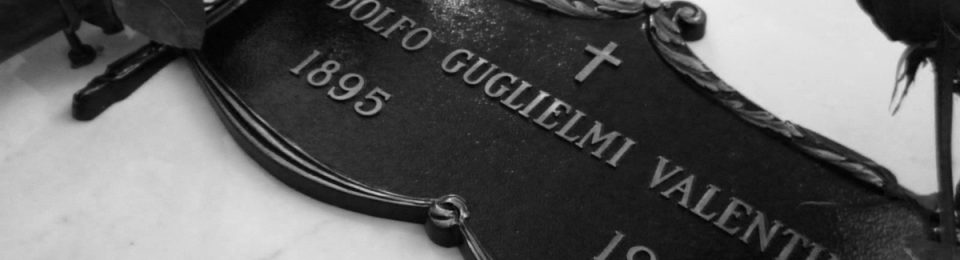
This article covers the basics of grave hunting and how to get started in the hobby. This article covers helpful tips, what you need (grave hunting tools), and more.
First, let me explain what grave hunting is. Grave Hunting is a hobby in which a person, or a group of people, visits a local cemetery to photograph the gravesites of notable people, and in many cases, famous people (celebrities). The hobby of Grave Hunting is closely associated with the singular word taphophile, which, according to Wikipedia, is someone who has a passion for and enjoyment of cemeteries. Taphophilia involves studying epitaphs, gravestone rubbing, photography, art, and the history of (famous or notable) deaths. People who grave hunt also have a passion for various forms of history and for doing background research on the people whose gravesites we come across.
Your tool bag will include the following items, along with optional items you can use for grave hunting.
1. First and foremost, you’re going to need a decent, dependable camera. I use two cameras: a Canon PowerShot SX130 and a Canon 70D. I also use a Canon Vixia HF G21 video camera.
2. I highly recommend using a high-capacity memory card for your digital camera. That way, if you want to take a large number of photos and want the best picture quality, you’ll be ready. I recommend using a high-capacity memory card.
3. Next, you’re going to need various maps of the cemetery. You can get these from the cemetery office. If you know exactly who you’re looking for, ask the office staff for a copy of a map for a specific section, along with the cemetery map.
The cemetery map covers the cemetery and lists various sections and small roads throughout. The section map will list only the specific section. The plus side of the section map is that it lists the final resting places of each person in that section; in most cases, it includes the last name of the person(s) buried in that plot. This also helps you pinpoint which part of the section a person is buried in, so you can decide which part of the section to approach the plot from based on who is closest to them from the road. In the long run, this will save you time trotting around the section in the cemetery. On a personal note, I use monuments as waypoints to gauge how close someone’s monument is to the person I’m looking for. If the person you’re looking for has a monument, all the better.
As for maps, I’ve noticed recently that several grave-hunting blogs and websites now offer FREE cemetery maps as PDF files for easy, hassle-free downloading. Just search Google, or take a gander at the websites I linked in the sidebar.
4. Next is a list of the notables buried in the cemetery. I’ve had good luck hunting these in Elmwood Cemetery in downtown Detroit, Woodmere Cemetery in Southwest Detroit, and various cemeteries in Chicago. You can usually get these at the cemetery office. Just ask if they have a list of the notables buried there. Office staff is usually happy to provide a list for grave hunters. Some cemeteries now offer books you can buy. These books are published by Arcadia Publishing, among other publishers, and usually include a decent number of gravesite photographs with brief biographical info on the cemetery’s notables. These books also include locations in most cases.
5. Next is an optional tool. A camcorder! These vary in price ranges and can cost a pretty penny if you want a high-end, top-of-the-line camcorder. These are useful if you’re more inclined to film your hunts. I have a Canon Vixia HF G21 and just love using it in the cemeteries.
6. Another optional item is a handheld GPS system. Again, these also cost a pretty penny. I don’t use one for my hunts, but I’ve heard of people using them. The cool thing about handheld GPS devices is that you can use them to find the gravesite GPS coördinates of famous and/or notable people. You can usually find the GPS coordinates on websites like Find A Grave.
7. Batteries for the camera. If you’re using a camcorder, I assume you already have a battery pack for it, like with the high-capacity memory cards I mentioned above. If you use a camcorder, you’d be better off using a high-capacity battery pack. For your digital camera, I use Energizer Ultimate Lithium batteries. These batteries will give you plenty of longevity and an insane number of photos between battery changes.
9. A grave hunting sidekick or partner. This one is optional. It’s good to have one for several reasons. One is that you can cover more ground in a specific section of a cemetery, which saves time. Another reason is that they can watch your back if you’re grave hunting in a run-down, high-crime part of town.
10. Misc items like a cigar or can of beer would be cool to leave if you went to the grave site of a gangster or a notable brewery owner. I’ve been known to leave single roses and cigars at Al Capone’s grave site, and cans/bottles of beer at brewery owners’ grave sites.
The Tools:
Now that I’ve covered the basic electronic gadgets used in the field. Next up are useful tools. This list was put together by some friends of mine, and I then combined what they said into one.
1. stiff-bristled brush
2. big sponge
3. water bottle w/water
4. WD-40 (Used to clean off bronze markers)
5. roll of paper towels
6. foam knee pad
7. compass
8. notebook & pens
9. gardening tools (hand shears, gardening knife)
10. hand wipes (clean hands)
11. backpack/haversack (to keep tools together)
The above-mentioned list was compiled by Jayne Osborne, Lisa Burks, and me (Josh Perry)
The websites:
Some of my favorites include
Find A Grave
Beneath Los Angeles
David Waller’s Civil War Grave Hunter
The Cemetery Guide
Grave Hunter
The Cemetery Project
The list goes on and on (check the links on the side of the main page for a complete listing)
Things to take into consideration:
When I’m grave hunting and have to go to the cemetery office for whatever reason, I always thank the person helping me find locations, give me maps, etc. Because they are not obligated to help you, it’s always a good idea to thank them for their time. For one thing, it shows that grave hunters are friendly people who appreciate the help they get. The same goes for groundskeepers; always thank them for their time.
Another thing I’d like to point out is that you should always be respectful when you see people tending to their loved ones’ gravesites. Also, it’s a good idea to avoid specific areas when you see a funeral in progress. You have to show some class and courtesy when grave hunting. Because it all boils down to making us look good in front of the public.
The things I’ve mentioned in the primer should give you a general overview of how to get started, what you need for the hobby, etc. I’ll revise the primer when I feel something new should be added.
Happy hunting,
Josh


Pingback: And we’re back… « Beyond The Ghosts…A Cemetery Blog
Thanks for the write up.
Greetings from an east coast grave hunter. Keep up the good work.
Your site, tips and trip reports interesting and much appreciated. JM, in SC
Pingback: 14 Celebrity Burial Sites That You Should Visit | Qeepr Community